

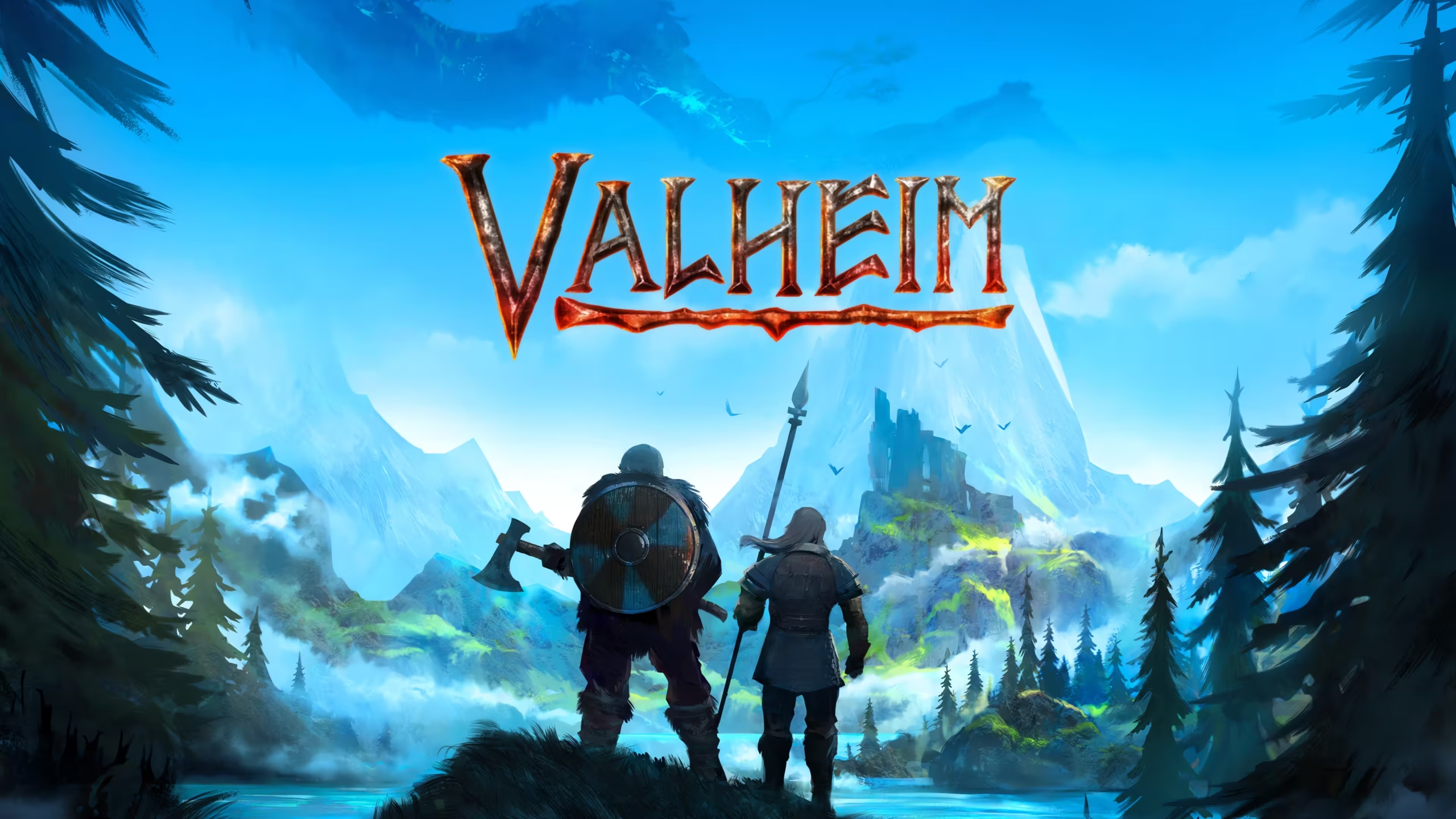
When the mythical owl and the raven Hugin drop us onto the quiet grasslands of the Meadows, Valheim seems like a peaceful paradise of Scandinavian survival. However, beneath its dense forests, stormy oceans, and frozen peaks lies a melancholic, tragic, and teologically disturbing narrative.
Inspired by the deepest roots of Norse mythology, Iron Gate Studio’s masterpiece does not place us in the shoes of a living hero seeking earthly glory, but rather those of a deceased warrior summoned from Midgard to serve as the Allfather’s personal executioner. In this premium lore article from lorekeeper.site, we uncover the true history of the Tenth Realm, the fall of the Draugr civilization, and the tragic nature of the Forsaken.
Share
1. The Tenth Realm and Odin’s Judgment
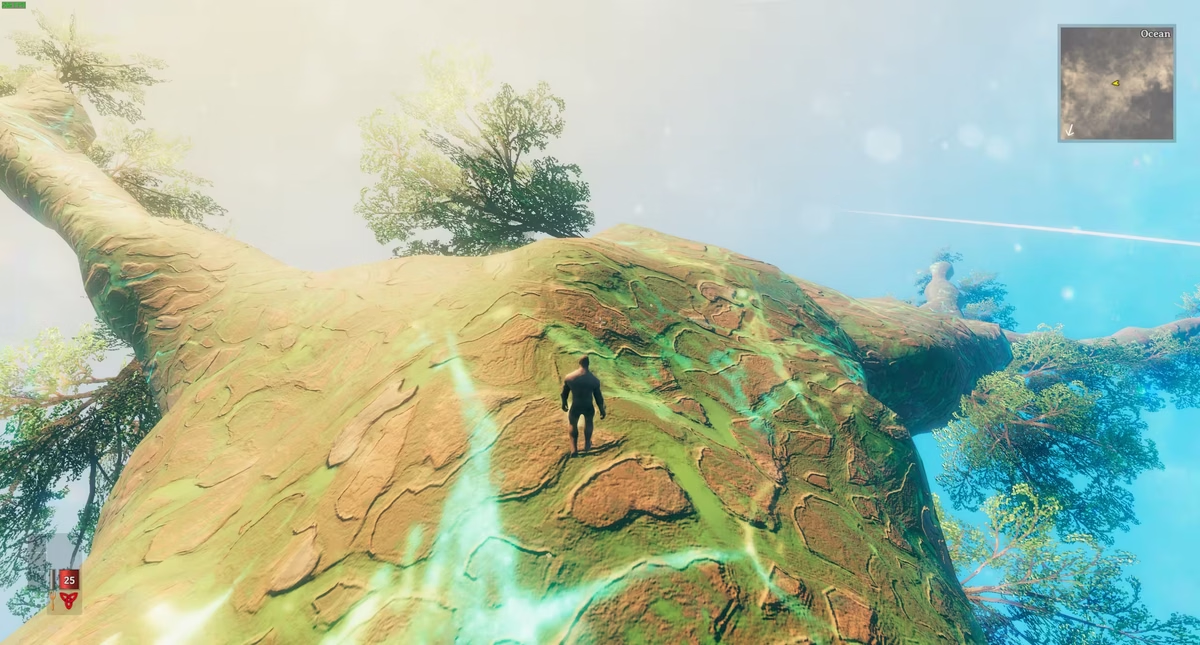
In traditional Norse cosmology, the universe is held together by the World Tree, Yggdrasil, which connects the Nine known Realms (such as Asgard, Midgard, and Jotunheim). However, the universe of Valheim establishes the existence of an ancient Tenth Realm.
The Primordial Inscription reveals that ages ago, Valheim was a thriving world directly connected to the boughs of Yggdrasil. However, when the ancient creatures and beings of immense power in this land began to rebel against the rule of the Aesir gods, the Allfather, Odin, took a drastic and merciless action:
He severed the boughs that held Valheim to the World Tree, unanchoring the realm and setting it adrift in the cosmos as an endless floating prison and purgatory.
Cut off from the sight of the gods, Valheim slumbered for millennia. But when Odin’s ancient foes began regaining their strength and threatening the balance of the universe, the Allfather dispatched his Valkyries to the battlefields of Midgard. The player is not a living warrior, but a soul plucked at the moment of death to be tested and purge the hostile forces of this purgatory before earning the right to enter Valhalla.
🔗 Read more: Elden Ring: The Tragedy of Queen Marika and Radagon’s Secret
2. The Tragic Origin of the Draugr and the Fallen Civilization
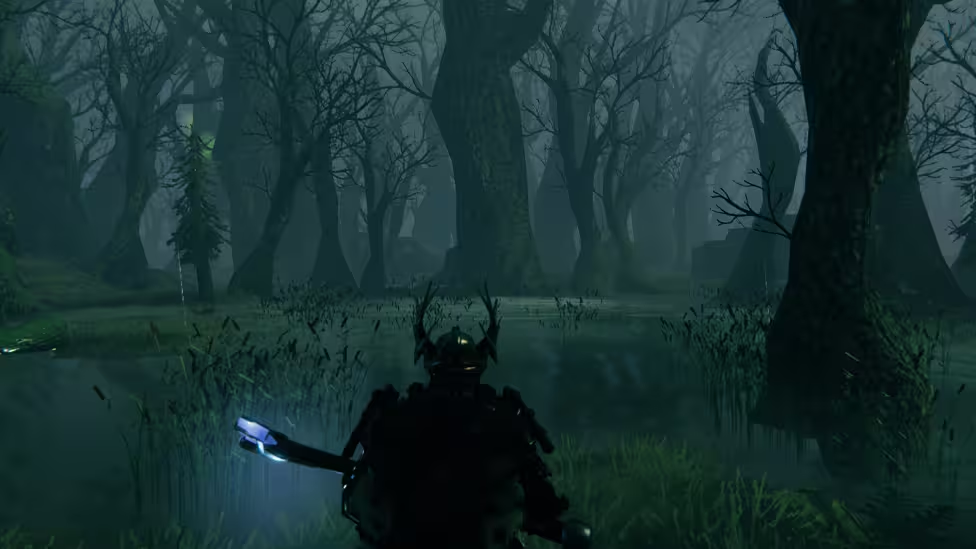
While exploring the pestilent Swamps and submerged crypts of Valheim, players encounter the terrifying Draugr—undead warriors clad in rusted armor. Ancient runestones reveal one of the most tragic stories in the game:
Centuries ago, the Swamp was not a land of mud and poison, but the home of a proud and noble human civilization. They built magnificent towers that touched the clouds and dug deep into the earth for precious metals. However, their overwhelming pride became their undoing.
Feeling invincible, these ancestors openly challenged the Aesir and Vanir gods, declaring war on the heavens. Divine retaliation was swift and catastrophic:
- Odin leveled their cities to the ground.
- Loki consumed their mines and strongholds in fire.
- Thor shattered their great towers with his hammer.
- Freya sowed their fields with tears of salt.
The entire civilization was submerged beneath feet of mud and erased from history. Yet, the pride of those people refused to die. The souls of the warriors who fell in that final battle refused to rest until their bodies turned to dust. They returned as the Draugr, creatures of rust and despair who eternally guard their sunken ruins.
3. The Morality of the Forsaken: Monsters or Victims?
The player’s primary quest is to defeat the bosses known as The Forsaken. However, analyzing the verses carved into the Runestones and the dialogues of their trophies reveals that these entities are not inherently evil, but rather forces of untamed nature or rebels against Odin’s tyranny:
- Eikthyr (The Divine Stag): Embodies the wild, untamed power of nature in the Meadows. Upon defeat, his trophy speaks: “Tell Odin he may have broken this form, but the wilderness will never submit to his rules”. He seeks only freedom.
- The Elder: The king of the Black Forest was originally a shoot of Yggdrasil itself and a force of wisdom when humans and trees lived in harmony. When humanity began felling the forests with axes, The Elder turned against gods and men to protect nature, leading Odin to banish him for his pride.
- Bonemass: A mass of black soil and old bone in the Swamp. Far from a malicious monster, Bonemass is the tragic culmination of forgotten warriors who were denied the peace of death. His trophy thanks the player for finally granting them release.
- Moder (The Dragon Mother): The great dragon of the Mountains. Her tragedy is heartbreaking: the player steals the eggs from her nest to force her down from the skies, making her weep tears of sorrow before slaying her.
- Yagluth (The Sorcerer King): The ancient king of the Fulings in the Plains who wore a crown and led a rebellion against Odin. He views the player merely as another executioner sent by the Allfather to keep his people in chains.
- The Queen and Fader: The Seeker Matriarch in the Mistlands acts purely on colony preservation instincts, while Fader, the king of the Ashlands, is a Shakespearean tragic figure whose mind was corrupted by dark influences before destroying his own kingdom.
🔗 Read more: The Truth Behind Shambhala and the Dark Sci-Fi Lore of Beast of Reincarnation
4. Runestones and the Chronicles of Ulf
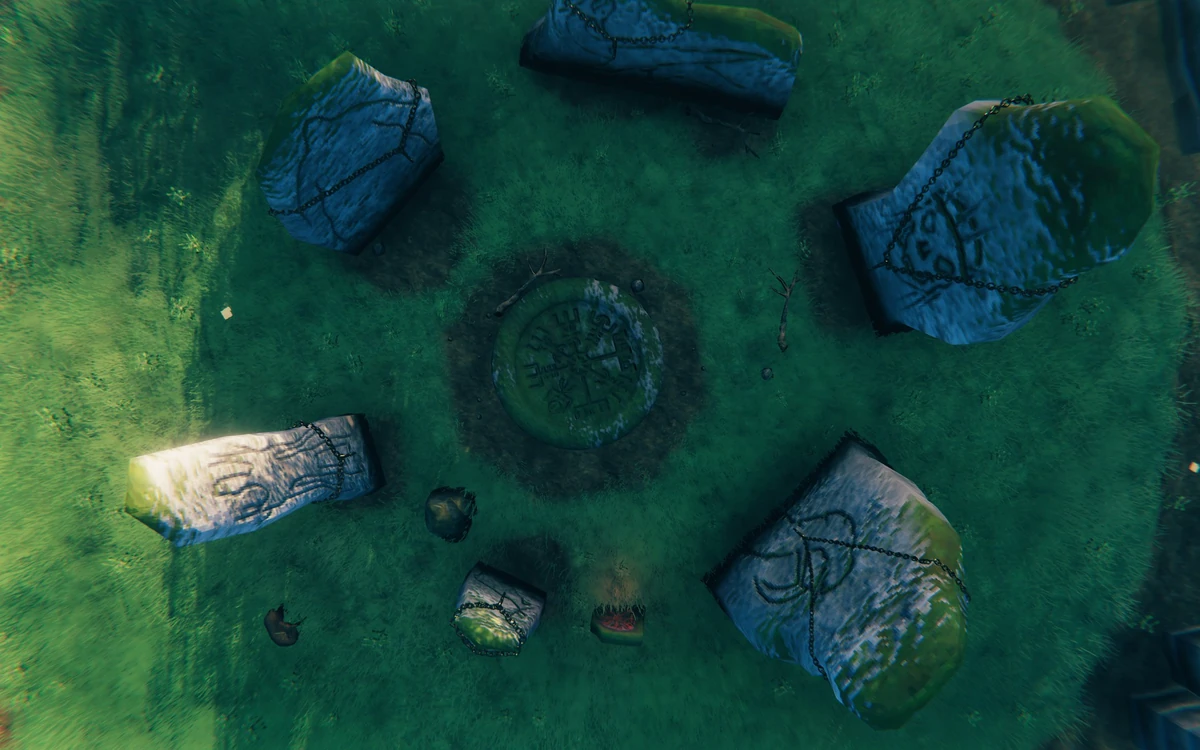
Across every biome, players discover red Runestones containing warnings and lore. Many of these were carved by human travelers who preceded the player in this mystical trial.
The most famous of these voyagers is Ulf, a Viking sent by Odin centuries earlier who recorded his victories, his fear of the mountain cold, and his encounters with legendary beasts. Another prominent figure is Astrid, a shieldmaiden of the forest who left encouraging notes for warriors yet to come.
These carvings prove that the player is merely one link in an endless chain of survivors. Odin continuously sends warriors to Valheim in cycles: those who fail become forgotten remains, while those who succeed ensure that the power of the Forsaken remains suppressed.
Conclusion: Odin’s Executioners or Liberators?
When piecing together the lore of Valheim, the narrative forces us to question our own role in this purgatory. We are not saving the world from an ultimate evil; we are taming wild forces and subjugating fallen kingdoms that dared to defy Odin’s authority.
As we march through untouched lands, chop down ancient trees, and hunt mythical beasts to mount their heads on our walls, Valheim reminds us that Viking survival is not about moral righteousness, but about strength, resilience, and the bloody price required to earn a seat in the hall of Valhalla.
- The Secret of the Tenth Realm: The Dark Lore and Tragic Theology of Valheim
- The Legend of Time: The Complete Lore and Three Timelines of Zelda Ocarina of Time
- How Many Endings Does Onimusha: Way of the Sword Have? The Ending & Post-Credits Explained
- The Awakening of the Samurai: Onimusha’s Lore and the Mysteries of Way of the Sword
- The Truth Behind Shambhala and the Dark Sci-Fi Lore of Beast of Reincarnation