

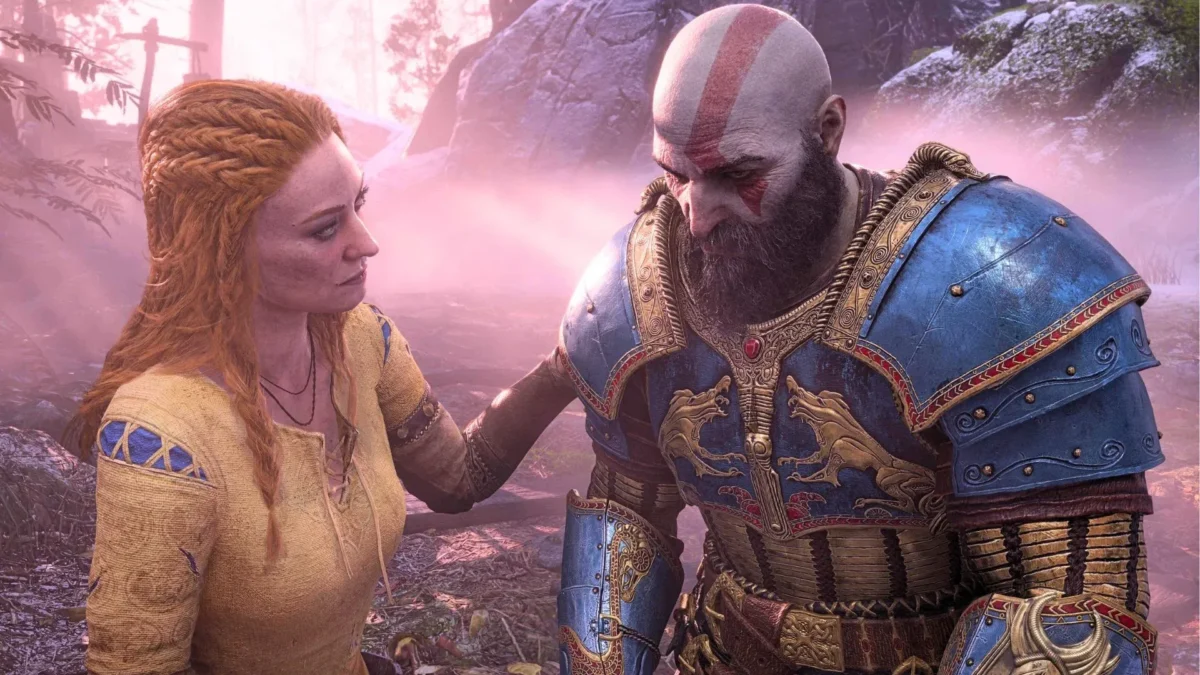
The story of God of War is one of the greatest epics in video game history. What began in 2005 as a brutal journey of vengeance based on Greek mythology has evolved into a deep study of character, fatherhood, and redemption in the frozen lands of Norse mythology. At the heart of this transition lies an enigmatic figure who, despite never appearing alive on screen, orchestrated the entire fate of the gods: Laufey the Just (Faye).
If you want to understand the complete timeline — from the destruction of Olympus to the prophecies of Ragnarök — and discover how Faye’s story sets the stage for a potential new game focused on her youth, this ultimate lore guide is made for you — lorekeeper.site
1. From Chaos to the Void: The Classic Greek Era Summary (God of War 1, 2, and 3)
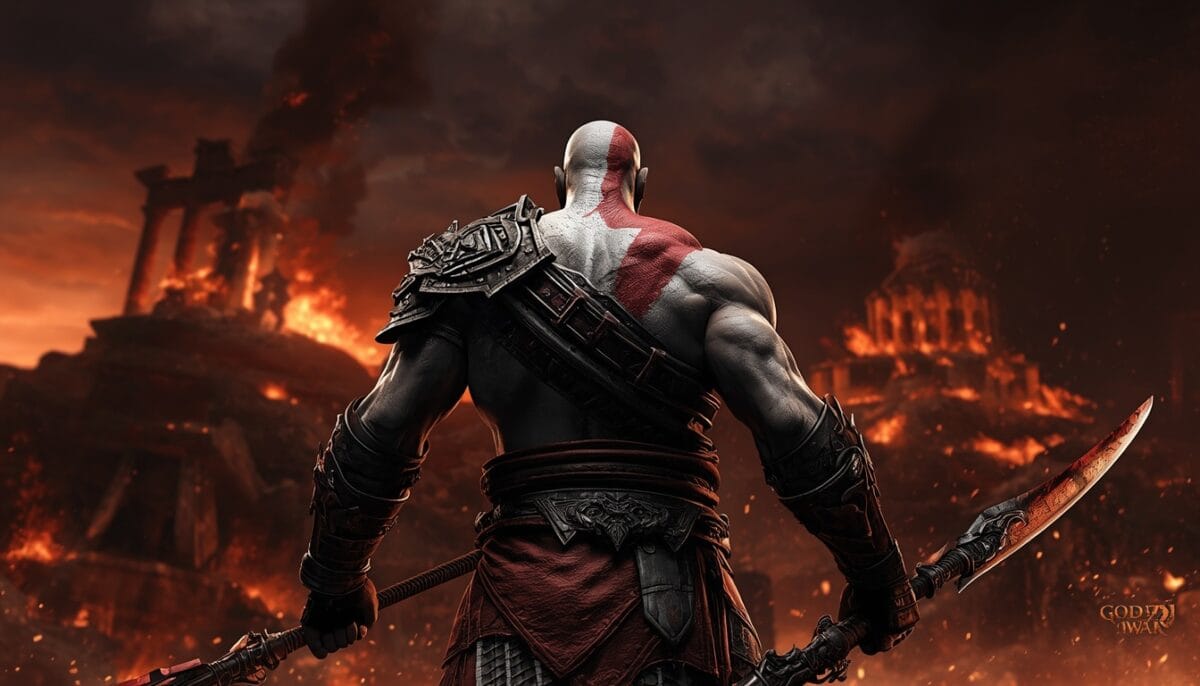
Before facing the monsters of Midgard, Kratos was the Ghost of Sparta. Consumed by ambition and militaristic rage, the Spartan general made a blood pact with Ares, the Greek God of War. In exchange for absolute power, Kratos surrendered his soul, becoming the deadliest pawn of Olympus.
However, Greek tragedy is inevitable. Ares, in an attempt to break Kratos’ last shred of humanity, tricked the warrior into murdering his own wife (Lysandra) and daughter (Calliope) in a temple dedicated to Athena. The ashes of his family were cursed to cling to his skin forever, rendering him eternally pale — the feared Ghost of Sparta.
God of War (2005)
Kratos’ vengeance begins here. Guided by the gods and Athena, he opens Pandora’s Box to acquire the power necessary to kill a god. He defeats Ares and takes the throne as the new God of War.
God of War II (2007)
Betrayed by Zeus, who feared his son’s growing power, Kratos is murdered and sent to the Underworld. Rescued by Gaia and the Titans, he travels through time using the Sisters of Fate to undo his own murder. He returns to the present, declares war on the gods, and marches with the Titans toward Mount Olympus.
God of War III (2010)
The absolute destruction of Greece. Kratos systematically hunts and executes the entire Greek pantheon (Poseidon, Hades, Helios, Hermes, Hercules). The death of each deity plunges the world into chaos: oceans swallow cities, plagues ravage the land, and darkness shrouds the sky. In the final confrontation, Kratos beats Zeus to death.
Athena demands that Kratos return the power of Hope he withdrew from Pandora’s Box so she can rule what is left of the world. Kratos refuses to be a pawn of yet another deity and drives the Blade of Olympus into his own chest, releasing Hope to humanity. On the verge of death, he crawls away, leaving only a trail of blood leading down the cliff toward the sea.
2. The Norse Awakening and the Burden of Fatherhood (God of War 2018)
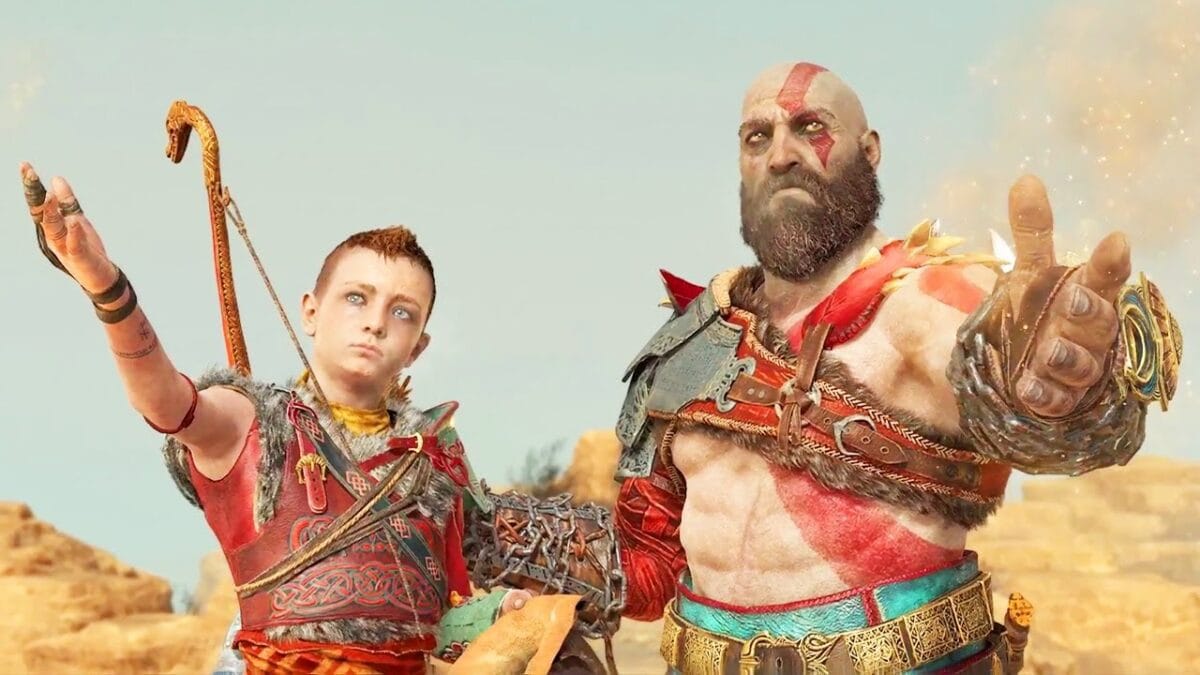
SCenturies passed. Kratos survived and traveled to the ancient north, finding refuge in the realm of Midgard under Norse mythology. There, he sought to hide his past of godhood and violent rage. He married Laufey (Faye), a mysterious woman, and together they had a son, Atreus.
The 2018 game begins with grief: Faye has mysteriously passed away. Her final wish was for Kratos and Atreus to burn her body and carry her ashes to the highest peak in all of the Nine Realms. This simple request was actually the trigger of a grand plan.
By breaking the magical stave barrier Faye had placed around their protective home to keep them hidden, the Aesir God Baldur knocks on Kratos’ door. Sent by Odin, who was desperately hunting the last surviving Giants, Baldur believed the “Giant” of Midgard was still in that house (unaware that Faye had already passed away and Kratos was a Greek god).
Kratos and Atreus’ journey becomes a rite of passage:
- Kratos struggles to teach Atreus how to control his godhood and his anger while hiding his own murderous past.
- Atreus, upon discovering he is a god, falls ill due to the internal conflict of his suppressed divine nature.
- To save his son, Kratos is forced to unearth his Blades of Chaos and travel to the realm of the dead, Helheim, confronting the ghosts of his Greek past.
At the end of the journey, after defeating Baldur (which breaks the barrier of immortality given by Freya and starts the apocalyptic winter, the Fimbulwinter), father and son reach the peak of Jötunheim. There, they discover murals painted on the stone revealing the shocking truth: Faye was a Giant (Jötunn). She foresaw their entire journey, every battle, and every step. Furthermore, Atreus learns that his birth name given by the Giants is Loki, the architect of Ragnarök.
3. The Twilight of the Gods: The Ragnarök War (God of War Ragnarök)
Fimbulwinter freezes Midgard and heightens tensions. Odin and Thor visit Kratos seeking an armed truce: they want Atreus to stop searching for clues left by the surviving Giants and Kratos to remain in isolation. Knowing the treacherous nature of the Allfather, Kratos refuses.
God of War Ragnarök dives deep into the deconstruction of fate:
- Atreus searches for answers about who Loki is and whether he is destined to serve Odin or lead Asgard’s destruction.
- Odin uses emotional and psychological manipulation, offering Atreus the knowledge of a mysterious mask that promises to reveal the truth behind creation itself.
- Kratos, tormented by a Jötunheim prophecy showing his death in Atreus’ arms, tries desperately to change his own destiny, refusing to become the war monster that destroyed Greece once more.
The game’s climax occurs with the siege and destruction of Asgard. However, Kratos’ true triumph is not military might, but his choice to spare his enemies and act with compassion and justice, breaking the cycle of divine destruction. Atreus discovers that the prophecies were not unavoidable chains, but warnings of what would happen if they did not change.
In the end, Atreus sets out on a solitary journey to find the souls of the Giants saved in mystical marbles across the realms. Kratos, on the other hand, finds a hidden mural left by Faye. The painting shows the future she truly wanted: a mural where Kratos is not feared as the destroyer of Olympus, but worshiped, loved, and revered by the people as a benevolent god of peace and reconstruction. For the first time in his immortal life, Kratos weeps with hope and embraces his role as the protector of the realms.
4. The Divine Hook: Laufey the Just and the Future of God of War
During side quests in the Crater region of the realm of Vanaheim, Kratos and his companions discover remnants of an apocalyptic battle that occurred long before Kratos arrived in the Norse lands.
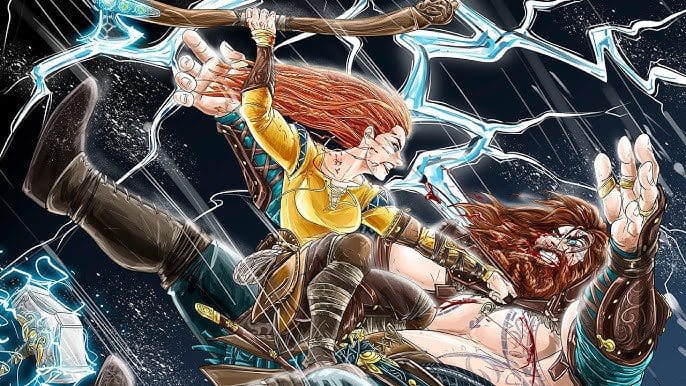
Speaking with local spirits, they learn that a warrior wielding a mysterious axe (the Leviathan Axe) clashed with the feared Thor in a combat so brutal that the collision of their weapons tore the fabric of reality, creating the Frozen Lightning Bolt, a massive pillar of pure frozen static energy that warps the sky of Vanaheim’s Crater.
That warrior was none other than Laufey the Just.
Who Was Laufey Really?
Long before she was Kratos’ loving wife and Atreus’ mother, Faye was the greatest warrior of the Jötunheim Giants. She led the Jötnar rebellion against the genocide promoted by Odin and the forces of Asgard.
- The Forging of the Leviathan Axe: Faye worked closely with the Huldra brothers, Brok and Sindri, to forge the Leviathan Axe. The weapon was created specifically to rival and counter the destructive power of Thor’s hammer Mjölnir.
- The Legendary Clash with Thor: The battle in Vanaheim’s Crater was a colossal stalemate. Thor was so heavily intoxicated he could barely remember the physical details of the fight, but Faye’s strength and unrelenting fury forced him to retreat, leaving the valley permanently devastated.
- The Meeting of Two Broken Souls: When Kratos, an exiled god running from his crimes in Greece, met Faye, they did not just find allies; they found two war-torn souls who chose to build a life based on love, far from the watchful eyes of Odin.
The Hook for “God of War: Laufey”
Rumors and community discussions about a game focused entirely on Faye’s story are stronger than ever. A prequel starring Laufey would allow Santa Monica Studio to explore:
- The Giants’ Perspective: Experience the culture, runic magic, and fall of Jötunheim from the direct perspective of someone who fought on the front lines.
- Dynamic Combat with the Leviathan Axe: See the axe in its magical prime, performing primitive ice strikes and unique combat techniques Faye mastered before passing it to Kratos.
- The Relationship with the Huldra Brothers: The forging process of the axe and Faye’s secret alliance with Brok and Sindri.
- The Forbidden Romance: Faye’s first dynamic encounter with Kratos. A poignant ending showing the beginning of the Spartan’s redemption through the birth of Atreus.
The lore of God of War has proven that fate is not unchangeable, but the foundation built by Laufey the Just ensured that Hope would finally bloom in the ancient north. The future of the franchise may lie in uncovering the glorious past of the one who saved both gods and men.
- The Secret of the Tenth Realm: The Dark Lore and Tragic Theology of Valheim
- The Legend of Time: The Complete Lore and Three Timelines of Zelda Ocarina of Time
- How Many Endings Does Onimusha: Way of the Sword Have? The Ending & Post-Credits Explained
- The Awakening of the Samurai: Onimusha’s Lore and the Mysteries of Way of the Sword
- The Truth Behind Shambhala and the Dark Sci-Fi Lore of Beast of Reincarnation