

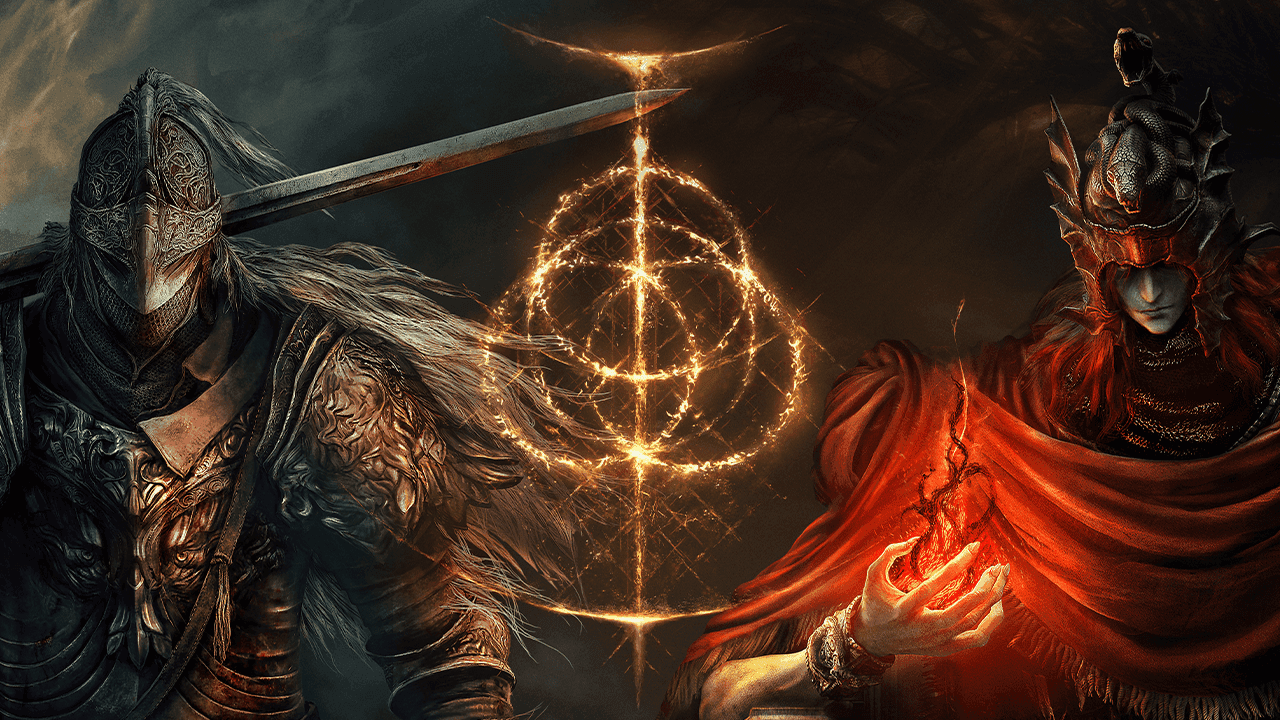
When you first begin your journey through the Lands Between as a Tarnished, Elden Ring’s opening narrative seems straightforward: Queen Marika the Eternal, driven to madness and despair by the brutal murder of her firstborn son, Godwyn the Golden, shattered the Elden Ring. This act of grief supposedly fractured the world, plunging her demigod offspring into a catastrophic civil war known as the Shattering.
But anyone who has dove deep into the monumental lore crafted by Hidetaka Miyazaki and George R.R. Martin knows that FromSoftware never tells a simple story. The truth behind Marika’s actions is infinitely darker, more calculated, and deeply tragic.
In this definitive megapost from lorekeeper.site, we will deconstruct the grand mysteries of Elden Ring: from Marika’s horrific origins in the Shaman Village to her complex alchemical duality with Radagon and the eons-long contingency plan involving you, the Tarnished.
Queen Marika in the Shaman Village
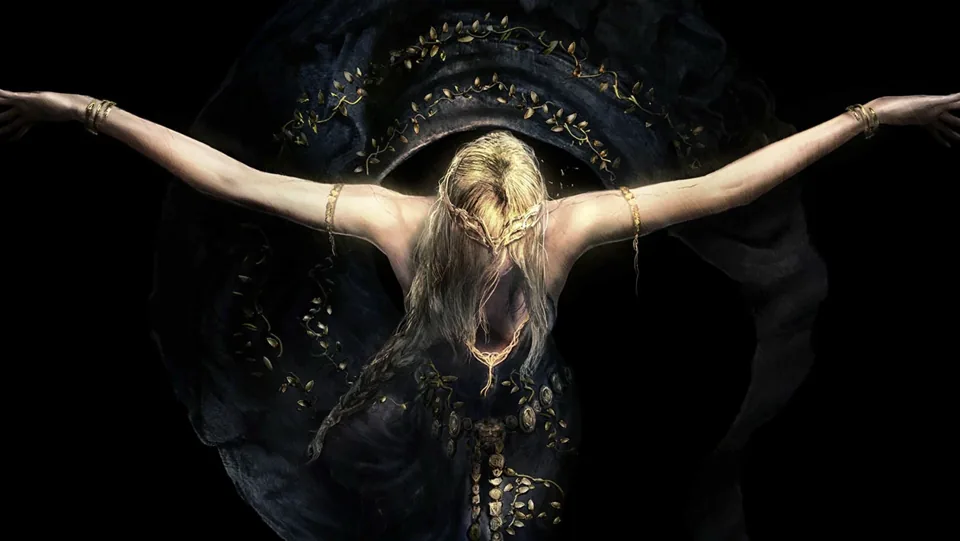
Credits: FromSoftware
1. The Origins of a Goddess: The Trauma of the Shaman Village
To comprehend why Marika decided to destroy the very order she spent centuries building, we must look to an era that predates her ascension to godhood. The Shadow of the Erdtree expansion unveiled the goddess’s most closely guarded secret: her home in the peaceful Shaman Village within the Land of Shadow.
Marika belonged to the Numen race, a people who originated from outside the Lands Between. The Numen possessed a unique and terrible biological trait: their flesh had an innate ability to harmoniously merge with other organic matter.
This biological blessing proved to be their ultimate curse. The original rulers of that land, the Hornsent—a fanatical culture that worshipped the primordial chaos of the Crucible—saw the Numen shamans as the perfect raw material for their holy rituals. The Hornsent kidnapped the shamans, tortured them with whips encrusted with teeth to open their wounds, and stuffed them alive into colossal clay jars alongside other human remains and condemned criminals.
The goal of this grotesque practice was to force their flesh to fuse together inside the jars, transforming the victims into composite entities the Hornsent revered as “saints.” When we visit Bonny Village, the ghosts of the past still echo this agony, whispering that a shaman’s sole purpose was to be put into the jar to achieve an artificial, forced sainthood.
Marika watched her entire lineage, her family, and her friends be brutalized, dismembered, and melted down inside these torture vessels. It was within this incomprehensible horror that a deep seed of hatred and an insatiable desire for vengeance took root in her heart. She resolved to obtain the power of a god, wipe the Hornsent from existence, and construct a world where no one would ever suffer under the rituals of the Crucible again.
2. Divine Ascension and the Illusion of the Golden Order
Identified as a promising candidate for godhood by the Two Fingers, Marika was chosen as the physical vessel for the Elden Ring by the cosmic entity known as the Greater Will. She was granted a shadowbound beast, Maliketh, who swore absolute loyalty to her but also served as a failsafe should she ever turn against the cosmos.
Upon ascending at the Gate of Divinity, Marika achieved her long-awaited vengeance. She established the Golden Order and raised the majestic Erdtree, but she also veiled the Land of Shadow, sealing away her horrific past. She sent her ruthless son, Messmer the Impaler, on a genocidal crusade of fire to burn and purge every last Hornsent from existence.
To ensure that physical decay and mortality could never touch her new realm, Marika made a monumental modification to reality: she plucked the Rune of Death (Destined Death) from the Elden Ring and tasked Maliketh with guarding it. Without natural death, the Lands Between became the domain of the Golden Order—an era of immortality where the souls of the deceased did not truly perish but returned to the roots of the Erdtree to be reborn.
However, Marika soon realized she had simply traded one cage for another. Though free from the Hornsent, she was now a puppet bound to the Greater Will, her Golden Order serving as a cosmic siphon for an outer god to gorge on the lifeforce and devotion of her subjects.
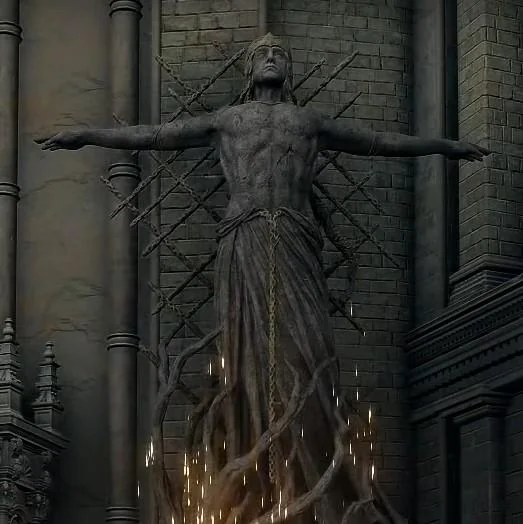
The Statue of Radagon in Leyndell
3. The Mystery of Radagon: Alchemical Duality and the Divine Impasse
If Marika was the Queen and Goddess, who was Radagon? The red-haired champion who rose to prominence leading the Erdtree’s armies against the Carian Royal Family in Liurnia eventually left his wife, Queen Rennala, to return to the capital, marrying Marika and becoming the second Elden Lord after Godfrey was hounded from the land.
By casting the Law of Regression incantation before the statue of Radagon in Leyndell, the Tarnished uncovers the game’s most mind-bending secret: Radagon is Marika.
They are, literally, two opposing minds sharing a single magical body. This duality is heavily inspired by medieval alchemy, specifically the concept of the Rebis—the divine hermaphrodite that represents the perfect union of the Red King (Radagon, with his red hair associated with the fiery fury of the Giants and blind loyalty to the order) and the White Queen (Marika, representing divinity, grace, and silent rebellion).
Though they shared a single body, their wills were in absolute conflict:
- Marika saw through the lies of the Golden Order and actively schemed to shatter the Elden Ring to free the world and herself from cosmic servitude.
- Radagon was a fundamentalist fanatic—a “leal hound of the Golden Order.” He studied glintstone sorceries and holy incantations to perfect and repair the laws of the world, desperate to keep the Order unbroken.
This clash created a physical and metaphysical stalemate. In her spoken echoes, Marika mocks his limits: “O Radagon, leal hound of the Golden Order. Thou’rt yet to become me. Thou’rt yet to become a god. Let us be shattered, both. Mine other self.”
When the final hour struck, their physical actions manifested this conflict in its most literal form: wielding Marika’s stone hammer, she struck the Elden Ring to shatter it, while Radagon immediately tried to use the very same hammer to repair the damage.
4. The Long-Term Plan: The Long March of Godfrey
Marika knew that betraying the Greater Will would result in her permanent imprisonment and physical crucifixion inside the Erdtree. Consequently, she drafted a meticulous, centuries-long plan of contingency.
Godfrey, the First Elden Lord, was her consort and general. The moment the last of the Erdtree’s enemies were defeated, Marika divested Godfrey and his warriors of their grace, blinding their eyes and exiling them from the Lands Between. This event became known as the Long March.
However, this banishment was not a punishment, but a crucial strategic move. By sending Godfrey and his kin to live and die as mortals in a distant land, Marika kept them hidden and safe from the immediate reach and corruption of the Greater Will.
In her spoken echoes, she prophesied their eventual return: after their deaths in the lands afar, she would return the grace she had claimed. They would be resurrected and summoned back to the Lands Between as the Tarnished, guided by grace to defeat her demigod children, burn the Erdtree, breach Radagon’s seals, and ultimately slay the god—the Elden Beast itself.
You, the player, are not a mere coincidence; you are the final pawn in a grand chess match orchestrated by Queen Marika eons ago to sever the puppet strings of the cosmos.
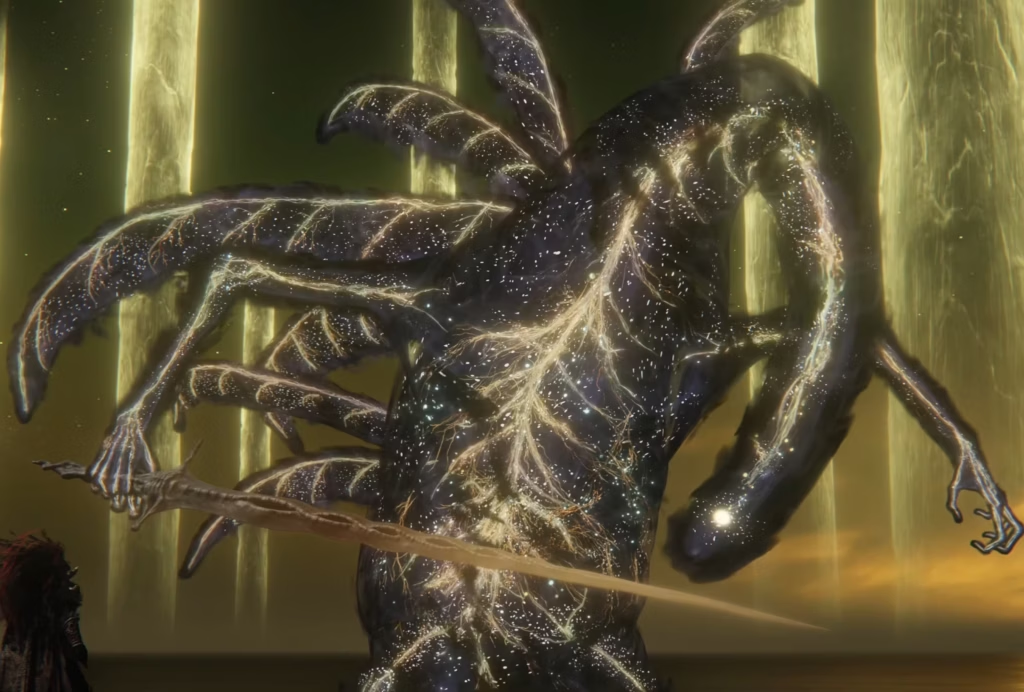
The Elden Beast
5. The Night of the Black Knives and the Collapse
Scholars of the lore continue to debate the extent of Marika’s involvement in the infamous Night of the Black Knives. During this tragic event, a fragment of the Rune of Death was stolen by Black Knife Assassins to slay Godwyn the Golden’s soul and Ranni’s physical body.
The assassins who carried out the deed were all Numen women who possessed historically close ties to Marika herself. While Princess Ranni orchestrated the ritual to secure her own cosmic independence, the ease with which the assassins infiltrated the heavily guarded capital suggests facilitation from within the royal line.
However, the death of Godwyn may have been a breaking point that Marika did not fully anticipate. Watching her beloved golden son transformed into a living corpse—the first of “Those Who Live in Death”—spreading roots of corruption beneath the soil of the entire continent, Marika realized that the Golden Order could no longer be reformed.
Her mind oscillating between absolute grief and a cold, resolute fury against the cosmic system that shackled her, she lifted her hammer and shattered the Elden Ring. In immediate retaliation, the Greater Will merged her with Radagon, locking them both within the Erdtree and crucifying her physical form, leaving the Lands Between fractured and waiting for the return of her exiled warriors.
Conclusion: The Loop of Suffering and Your Ultimate Choice
The history of Elden Ring is a chronicle of the limits of human suffering and the arrogance of trying to manipulate the physical laws of the cosmos to avoid pain. In trying to build a deathless utopia to bury the trauma of her childhood in the Shaman Village, Marika ended up locking all of humanity in an eternal cycle of stagnation, decay, and tragedy.
At the very end of your journey, as you stand before the fractured, stone body of Queen Marika inside the Erdtree, the choice is entirely yours. You can mend the Elden Ring and perpetuate the cycle of the Golden Order, or you can assist Ranni in ushering in the Age of Stars, banishing the influence of outer gods once and for all and letting the Lands Between finally chart their own course in the cold, free dark of the cosmos.
Which ending did you choose for the fate of Marika and the Lands Between? Leave your theories in the comments below, and share this article with your fellow Tarnished! Don’t forget to subscribe to the lorekeeper.site newsletter to stay up to date with the deepest mysteries of your favorite games!
- The Secret of the Tenth Realm: The Dark Lore and Tragic Theology of Valheim
- The Legend of Time: The Complete Lore and Three Timelines of Zelda Ocarina of Time
- How Many Endings Does Onimusha: Way of the Sword Have? The Ending & Post-Credits Explained
- The Awakening of the Samurai: Onimusha’s Lore and the Mysteries of Way of the Sword
- The Truth Behind Shambhala and the Dark Sci-Fi Lore of Beast of Reincarnation